

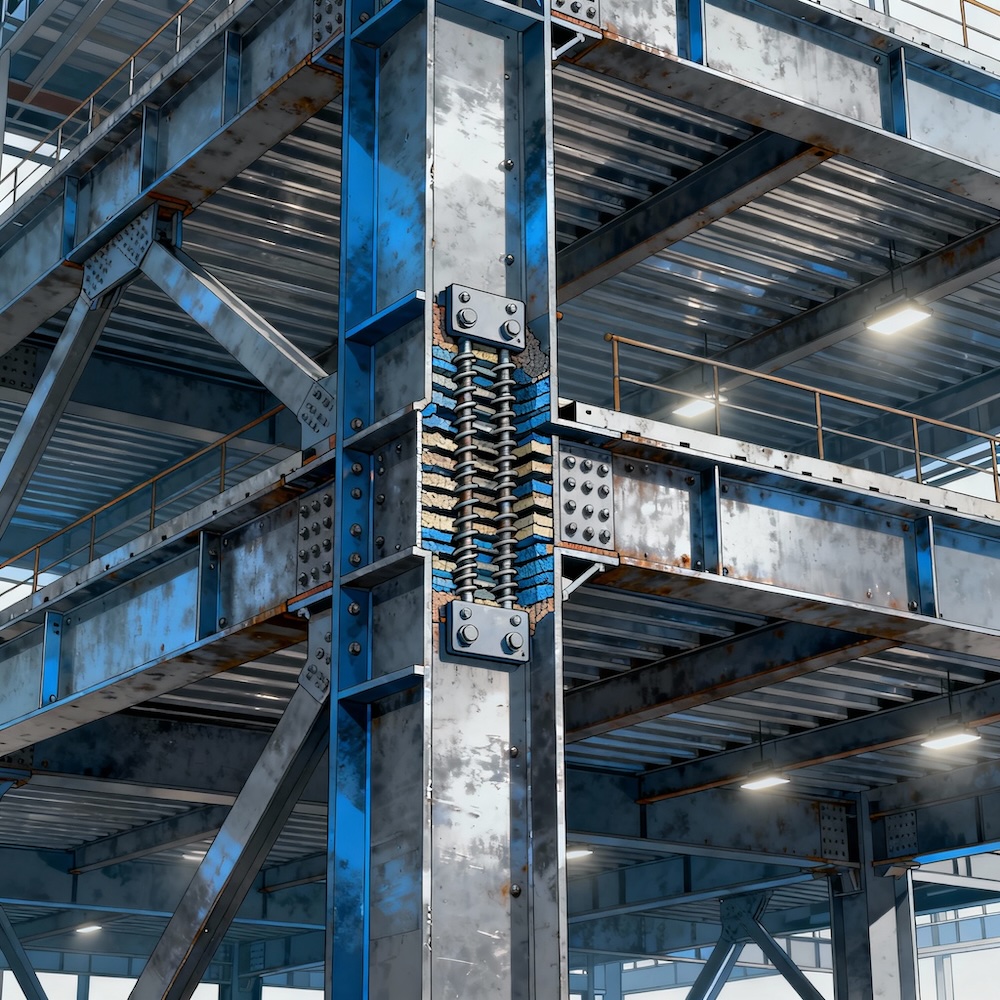
Light Steel Frame Construction: Superior Structural Performance in Seismic Zones
When earthquakes strike, building performance can mean the difference between minor structural distress and catastrophic failure. Traditional construction materials like unreinforced brick, concrete, and heavy stone structures often lack the flexibility required to withstand seismic forces effectively, frequently resulting in brittle failure and collapse. By contrast, Light Steel Frame (LSF) construction represents a fundamentally different engineering approach—one that combines material properties and structural design to excel precisely where traditional methods fail. Steel’s natural ductility and high strength-to-weight ratio make LSF structures inherently resilient to seismic activity, protecting occupants and preserving structural integrity even during significant earthquakes.
The foundation of LSF’s seismic performance begins with the lightweight nature of steel frames themselves. During an earthquake, ground acceleration creates inertial forces proportional to a building’s mass—the heavier the structure, the greater the seismic forces acting upon it. LSF buildings, being significantly lighter than equivalent concrete or traditional masonry structures, experience substantially reduced inertial forces during ground shaking. This reduced mass translates into lower foundation loads (allowing foundation dimensions to be reduced by over 70% compared to concrete construction) and, critically, lower stresses throughout the structural frame. For tall buildings in seismic zones, this lightweight advantage becomes particularly pronounced, as reduced mass at height dramatically improves seismic stability.
Beyond lightweight design, steel exhibits exceptional ductility—the capacity to bend and deform under stress while absorbing and dissipating energy without brittle failure. This is fundamentally different from concrete’s behavior under extreme loading, where brittle fracture occurs suddenly and catastrophically. When seismic forces act on an LSF structure, the steel frame flexes and yields, absorbing seismic energy through this controlled deformation. Rather than cracking or collapsing, the structure remains intact while dissipating earthquake energy through material deformation and specialized bracing systems. Advanced engineering design further enhances this natural resilience through precisely calculated bracing patterns, shear walls, and foundation connections that distribute seismic forces evenly throughout the structure, preventing dangerous stress concentrations.
For Northern Ontario communities considering LSF construction, the seismic performance advantage provides both practical safety benefits and long-term economic protection. While Ontario experiences fewer major earthquakes than western Canada, seismic risks remain real, and building codes increasingly demand seismic compliance. LSF structures meet and often exceed these modern seismic standards through their inherent material properties and engineered design. Beyond earthquake scenarios, LSF’s structural flexibility also provides superior performance under wind loading and other dynamic forces—making LSF buildings exceptionally safe and durable for decades of reliable service. By choosing NordFrame’s LSF solutions, you invest not only in rapid, cost-effective construction but in buildings engineered for genuine structural resilience and long-term occupant safety.