
Why Light Steel Frame Is the Sustainable Building Solution for the Future
The construction industry accounts for nearly 40% of global carbon emissions, making it one of the largest contributors to climate change. As environmental consciousness grows and building codes increasingly demand carbon-neutral construction, innovative solutions like Light Steel Frame (LSF) are emerging as critical pathways to sustainable development. Unlike traditional construction methods that generate substantial waste and rely on energy-intensive manufacturing processes, LSF represents a fundamentally different approach that prioritizes environmental responsibility without compromising structural performance or build speed.
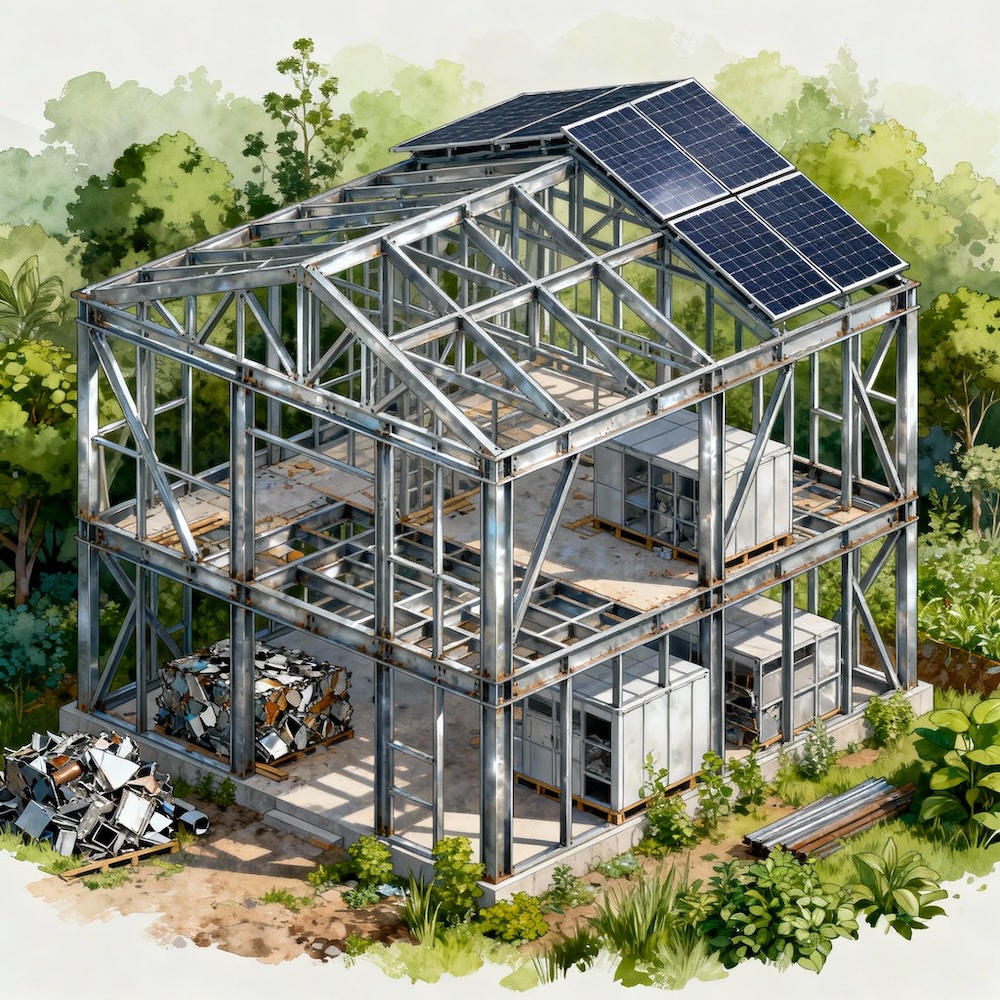
A primary environmental advantage of LSF construction is its remarkable waste reduction. Traditional construction methods generate significant material waste through inefficient cutting, fitting errors, and on-site miscalculations. Factory-manufactured LSF components, by contrast, are precision-engineered and cut exactly to specification with virtually no waste—achieving up to 90% material efficiency. Additionally, the steel used in LSF components is sourced increasingly from recycled materials, and the steel itself is 100% recyclable at end-of-life. This circular economy approach means that buildings constructed today can be entirely disassembled and recycled into new structures decades from now, creating a truly sustainable building cycle. For Northern Ontario, where resource preservation and environmental stewardship are paramount, this represents a meaningful commitment to protecting the region’s natural heritage.
Beyond material sustainability, LSF manufacturing itself generates substantially lower environmental impacts than traditional construction. The production of light steel frames is far more energy-efficient than concrete or traditional heavy steel production, with most energy-intensive material extraction already completed during steel production. Furthermore, the rapid assembly enabled by prefabricated LSF systems reduces on-site construction activities, lowering fuel consumption and site emissions by up to 50% compared to traditional methods. The precision nature of factory manufacturing also means reduced errors and rework, eliminating the additional material waste and emissions that accompany construction mistakes.
Energy efficiency represents another significant sustainability dimension of LSF buildings. When properly designed with high-quality insulation between steel studs, LSF structures deliver superior thermal performance, reducing heating and cooling requirements throughout the building’s operational lifespan. This operational efficiency translates into dramatically lower energy consumption year after year, with cumulative carbon savings that often exceed the embodied carbon of the structure itself. For Northern Ontario’s climate, where winter heating demands are substantial, this energy efficiency provides both environmental and economic benefits. By choosing NordFrame’s LSF solutions, Northern Ontario builders and developers actively contribute to Canada’s environmental goals while creating buildings designed for long-term sustainability and minimal ecological impact.